
A finish problem rarely appears on day one. It shows up months later as rust at a cut edge, fading around a sun-exposed door, fingerprints that never seem to disappear, or glare that makes a control panel hard to read. By then, the color sample that looked fine in the conference room is beside the point.
Color still matters, but it is only the visible part of a larger finish system. The substrate, pretreatment, coating chemistry, film thickness, cure, texture, and edge details usually have more influence on service life than the color name alone.
A reliable specification starts with the environment in which the enclosure will operate. Once that is clear, color can do useful work: manage glare, support safety markings, make labels easier to find, hide routine handling marks, and create consistency across a product line.
1. Treat Color and Finish as One System
Two panels can be the same shade of gray and perform very differently. One may use a well-prepared galvanized substrate and an exterior-grade coating; the other may use poor pretreatment and an interior powder. Their color chips may match, but their corrosion and weathering performance will not.
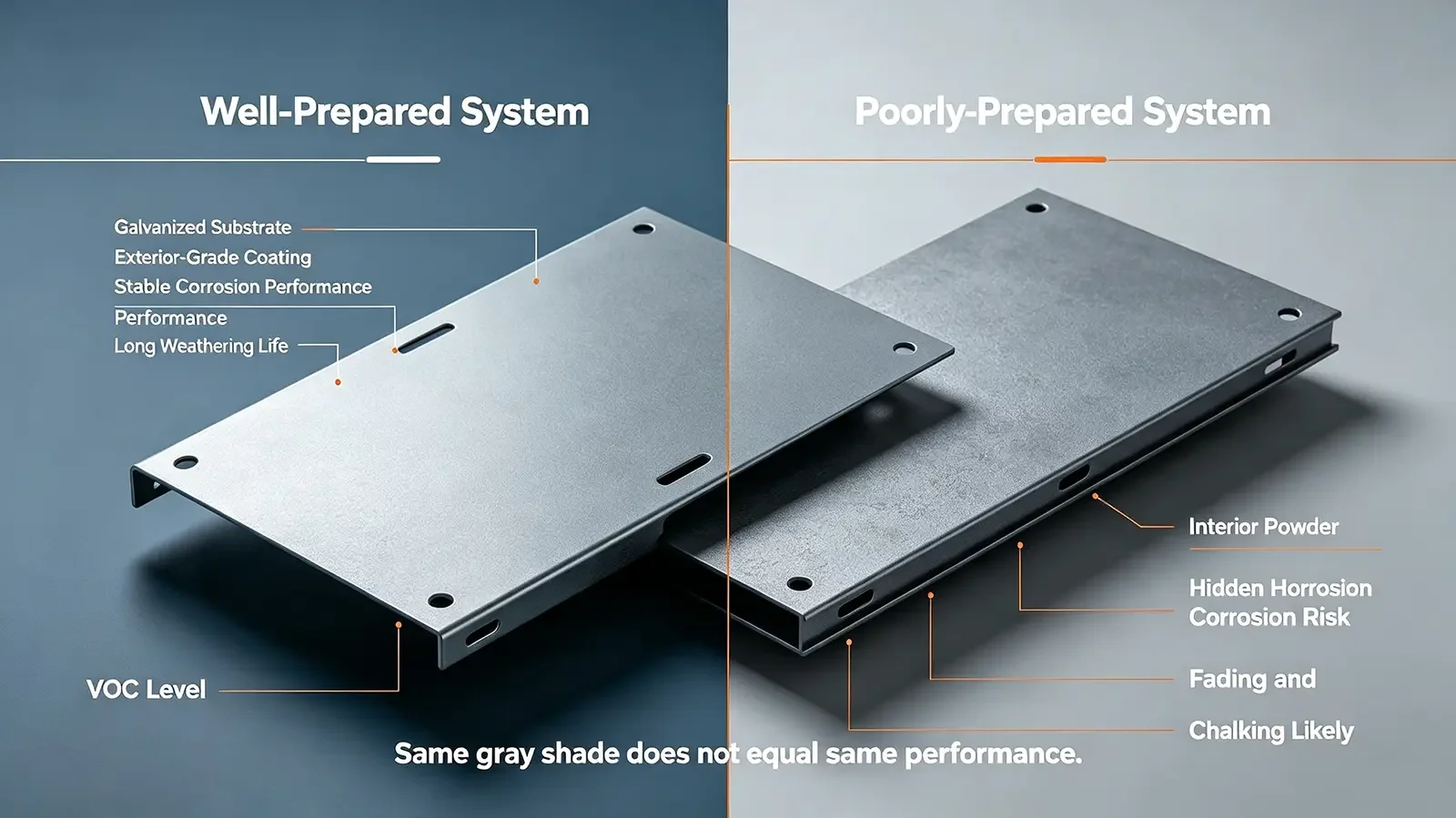 For engineering purposes, the finish system includes:
- Substrate: cold-rolled steel, galvanized steel, aluminum, stainless steel, or another alloy.
- Surface preparation: cleaning, conversion coating, blasting, or other pretreatment appropriate to the substrate and process.
- Coating chemistry: for example, epoxy, polyester, hybrid powder, acrylic, polyurethane, or fluoropolymer-based systems.
- Application and cure: film thickness, oven profile, coverage at corners and recesses, and controls for rework.
- Appearance: color, gloss, texture, and acceptable variation between batches and components.
- Detail design: masking at threads and grounding points, drainage, cut-edge protection, fastener selection, and seal compatibility.
|
The practical rule Do not approve a finish from a color code alone. Approve a complete coating specification and a physical sample made on the intended substrate with the intended process. |
2. Start With the Service Environment
The right questions are ordinary ones: Is the enclosure indoors or outdoors? Will it see direct sun, condensation, salt, oils, cleaning chemicals, or frequent handling? Does it need to be wiped down every shift? Are warning colors regulated at the installation site? The answers narrow the finish options quickly.
Indoor Data Center and IT Enclosures
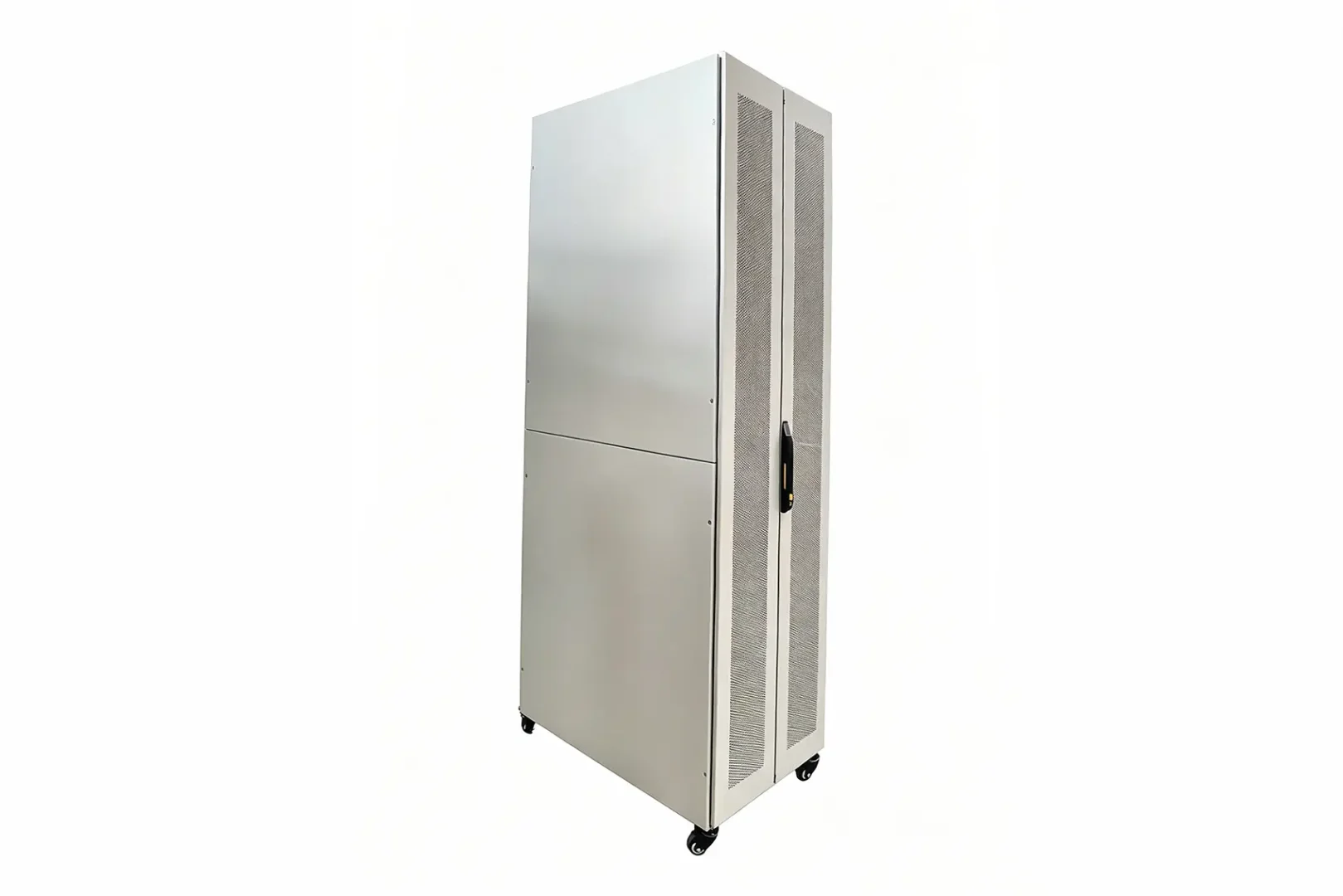
In a conditioned data center, enclosure color usually has less effect on equipment temperature than airflow design, fan performance, rack layout, and the heat produced by the equipment itself. Claims that a lighter cabinet color will materially reduce cooling demand should be supported by testing in the actual installation.
Color is still useful indoors. Matte or low-gloss neutral finishes can reduce reflections from overhead lighting, keep long cabinet rows visually consistent, and provide enough contrast for port labels and status indicators. Very dark gloss finishes tend to show fingerprints and fine scratches; very light gloss finishes can produce distracting glare.
 Factory-Floor Control Enclosures
Factory enclosures may be exposed to dust, oil mist, coolants, cleaning agents, bumps, and frequent access. Here, chemical compatibility and adhesion matter more than whether the base color is gray or blue.
Midtone grays and muted blues can make light handling marks less obvious, but they do not make a surface cleaner. Inspection and cleaning intervals should be based on the process hazard, not on how well the color hides soil. Use contrast around handles, disconnects, access points, and labels where it improves identification, while reserving regulated safety colors for their intended meanings.
 Outdoor Energy and Utility Enclosures
Outdoor service brings several loads at once: ultraviolet radiation, rain, condensation, temperature cycling, airborne contaminants, and sometimes salt. A generic callout such as “outdoor gray powder coat” does not describe enough to predict performance.
A lighter exterior can reduce solar heat gain compared with a darker exterior, but the result depends on measured solar reflectance, coating chemistry, gloss, pigment, and exposure—not simply on a familiar color name. Specify the performance you need, including weathering and corrosion tests, and make sure doors, seams, drainage paths, fasteners, and cut edges are designed for the same environment.
Laboratory and Medical Equipment Enclosures
A white enclosure may look clean, but color does not make a surface hygienic. For laboratory and medical equipment, focus on cleanability, resistance to the actual disinfectants and reagents in use, smooth transitions, sealed joints where required, and a finish that tolerates repeated wiping without softening or discoloring.
Low-gloss light neutrals are common because they create a calm appearance and limit reflections. The final gloss level should still be tested under the room’s lighting and against the required cleaning method. Heavy textures can hide fabrication marks, but they may also be harder to wipe down.
 Application Guide: Useful Starting Points
|
Application |
Reasonable starting point |
What to verify |
|
Indoor IT and data |
Matte or low-gloss neutral finish |
Label contrast, glare, scratch visibility, airflow and thermal design |
|
Factory controls |
Midtone neutral or muted blue with limited functional accents |
Oil and chemical resistance, adhesion, impact areas, cleaning method |
|
Outdoor utility |
Light or medium exterior-grade color with compliant warning markings |
Corrosivity, UV exposure, solar reflectance, salt, cut edges, hardware |
|
Laboratory or medical |
Smooth, cleanable light neutral |
Disinfectant compatibility, wipe-down durability, seams, gloss under task lighting |
3. Use Color to Explain the Product
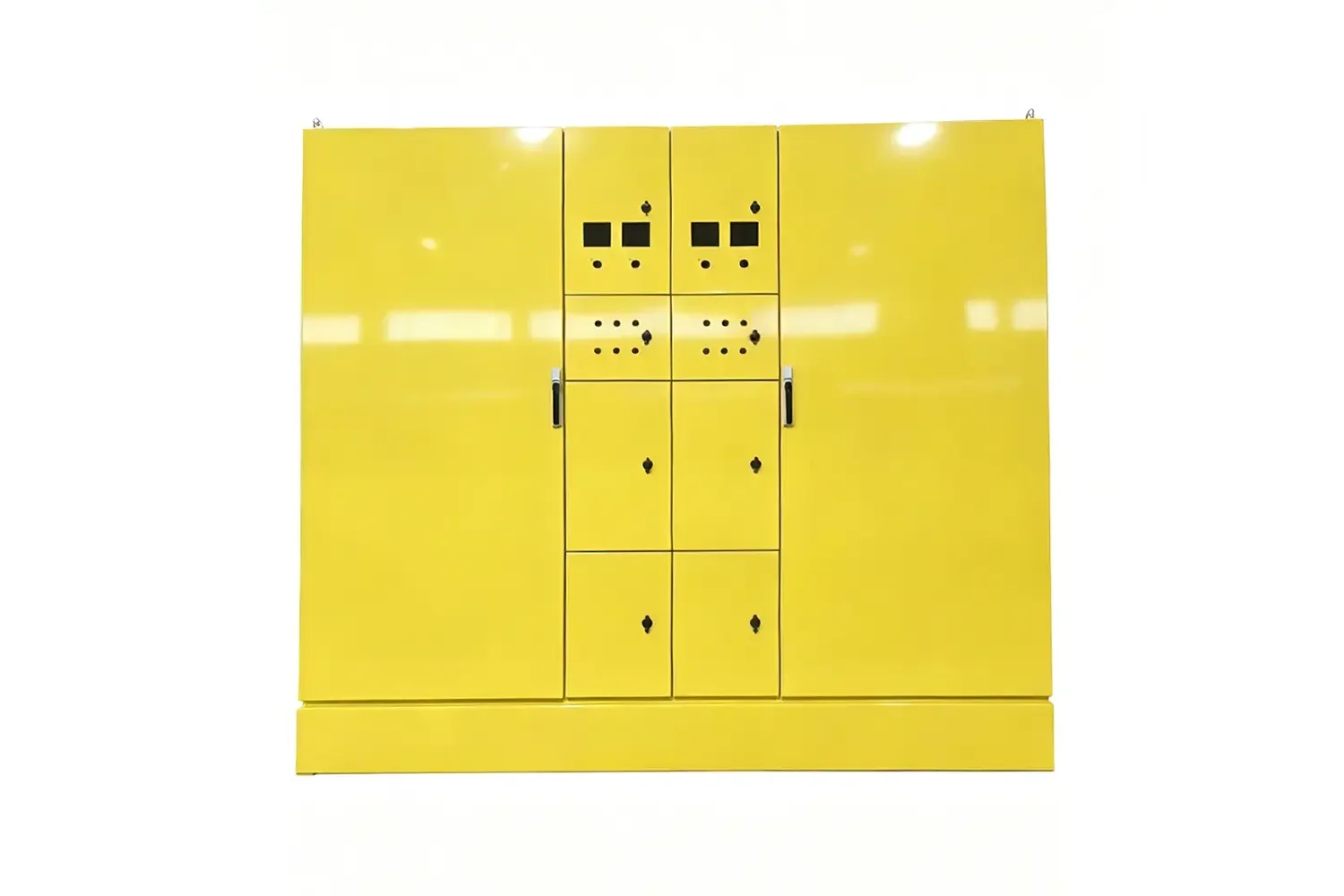
A good color layout makes the enclosure easier to understand at a glance. It should reinforce the physical structure and operating points rather than divide large panels into arbitrary blocks.
Separate Base, Structural, and Functional Colors
- Base color: the dominant finish on doors, side panels, and other large surfaces.
- Structural color: a restrained secondary tone on frames, plinths, ventilation panels, or replaceable modules when that distinction is useful.
- Functional accent: used sparingly for controls, status indicators, hazards, service points, or identification.
Designers sometimes use a 70/20/10 ratio for base, secondary, and accent colors. It can be a helpful visual check, but it is not an industrial standard. The actual proportions should follow the enclosure’s structure and the information operators need.
Do Not Rely on Color Alone
A red patch or yellow handle may be missed by a color-blind user, may look different under unusual lighting, or may lose its meaning when several accent colors compete for attention. Pair color with labels, symbols, shape, position, or guarding as appropriate. Keep text-to-background contrast high enough to remain legible after normal wear.
Keep Safety Colors Specific
In the United States, OSHA 29 CFR 1910.144 assigns red to certain danger and stop functions and yellow to caution and physical hazards. That rule is narrower than a general corporate color palette. Project requirements may also reference ANSI, NFPA, customer, or local standards, so verify the governing documents before freezing the design.
 4. Choose the Coating Process Before Debating the Shade
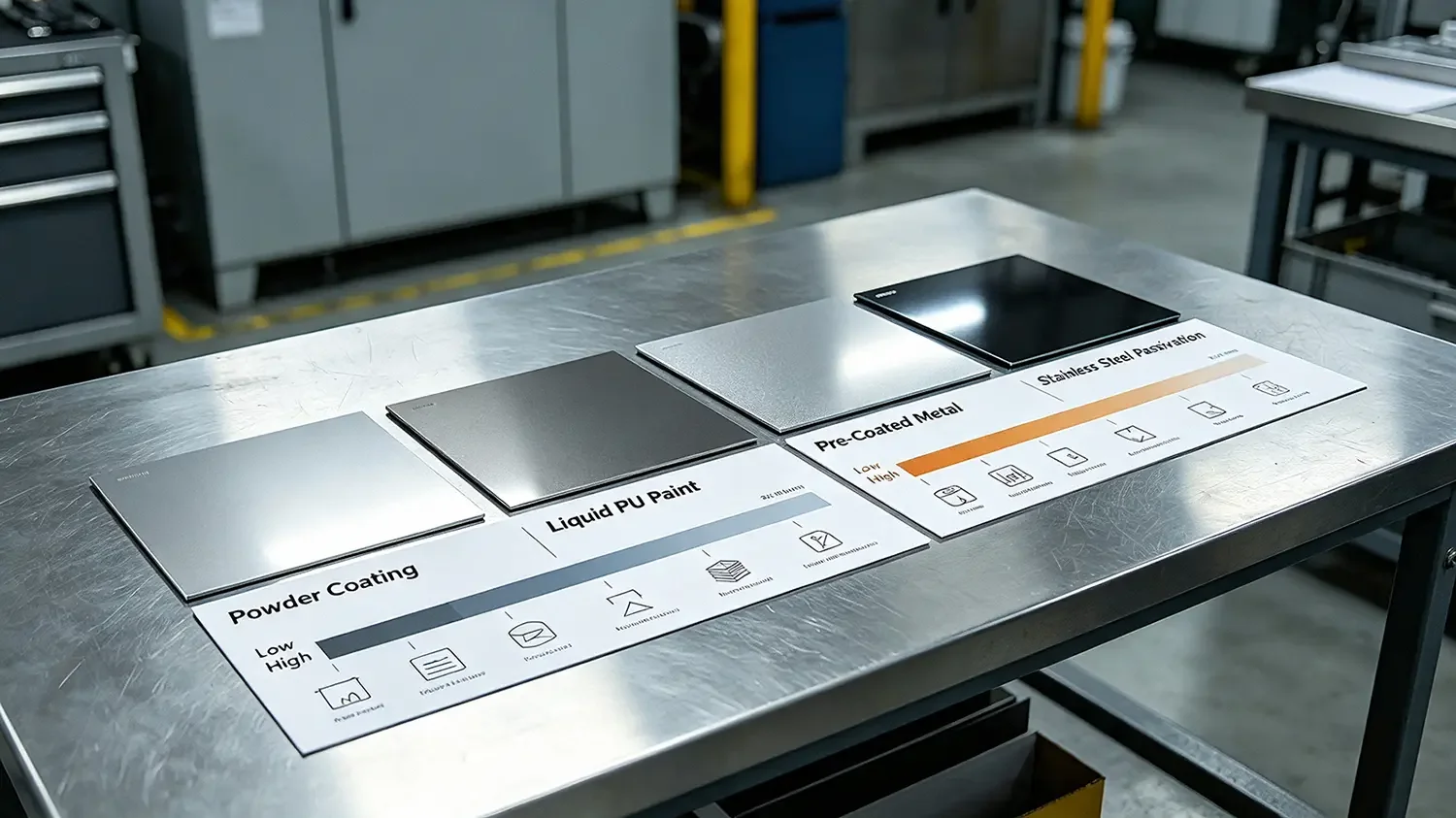
Powder coating is common for fabricated sheet metal, but it is not automatically the best answer for every enclosure. The decision depends on production volume, substrate, part geometry, field-repair needs, chemical exposure, and the available pretreatment and cure process.
|
Finish path |
Often a good fit for |
Points to watch |
|
Powder coating |
Production metal parts that can tolerate oven cure; durable factory-applied finishes |
Coverage in deep recesses, film build on fits and threads, grounding masks, cure verification, repair method |
|
Liquid coating |
Large assemblies, thin-film requirements, specialized chemistries, or easier field touch-up |
Solvent and emissions controls, flash and cure conditions, overspray, operator consistency |
|
Galvanized or prefinished metal |
Projects that benefit from factory-applied metallic or coil-coated protection |
Cut edges, forming damage, welding effects, galvanic compatibility, appearance at joints |
|
Stainless steel or aluminum finish |
Corrosive or cleanable applications where the substrate is part of the finish strategy |
Alloy and temper, surface direction, fingerprints, chemical attack, galvanic couples |
|
aluminum finish
|
the substrate is part of the finish strategy
|
chemical attack, galvanic couples
|
Epoxy powders generally provide strong adhesion and chemical resistance but are not the usual choice for long-term UV exposure. Polyester and other exterior-oriented chemistries are more common outdoors. Hybrid systems are often used indoors. These are broad categories, not guarantees; the supplier’s data and project testing must support the final selection.
 5. Write a Finish Specification That a Supplier Can Build
A short, testable specification prevents most finish disputes. Include the following items:
- Describe the service environment. State indoor or outdoor use, expected temperature range, humidity or condensation, UV exposure, salt, chemicals, abrasion, and cleaning agents.
- Identify the substrate and fabrication sequence. Note whether coating occurs before or after welding, punching, bending, and edge finishing.
- Define surface preparation. Call out the required cleaning and pretreatment system, including controls for weld scale, oils, and corrosion products.
- Specify the coating system. Name the chemistry or approved product class, number of coats if relevant, target film thickness, and cure requirements.
- Control appearance with more than a color code. Include the color standard, gloss range, texture, viewing conditions, and an approved physical master panel.
- Document masking and contact areas. Mark threads, gasket interfaces, electrical grounding points, hinges, latches, and other areas where coating thickness affects function.
- Define acceptance tests and limits. List the test method, specimen preparation, exposure conditions, evaluation criteria, sampling plan, and allowable variation.
- Plan for repair and future batches. Define touch-up materials, color-control records, traceability, and what happens when the coating or pretreatment supplier changes.
6. Match the Test to the Failure You Care About
A test result is useful only when it is tied to a realistic failure mode. “Passes 1,000 hours” is incomplete without the test method, panel preparation, scribe condition, evaluation criteria, and an explanation of how the result will be used.
- ASTM D3359 provides tape-test methods for rating coating adhesion on metallic substrates. It is a practical screening tool, not a fine measurement of bond strength.
- ASTM B117 defines operation of a salt-spray apparatus. ASTM cautions that stand-alone salt-spray results do not reliably predict performance in natural environments, so the test should not be converted directly into years of service life.
- ASTM D4587 covers fluorescent UV and condensation exposures for coatings. The specified cycle and evaluation method matter because different conditions can produce different degradation and rankings.
- ASTM D2244 describes calculations for small color differences from instrument measurements. Buyer and supplier should agree on the color-difference equation and tolerance.
- ISO 12944-5 and ISO 12944-6 provide a framework for selecting and testing protective paint systems for steel in defined corrosive environments. ISO also notes that laboratory results aid selection; they are not exact service-life predictions.
Depending on the application, a complete validation plan may also include film-thickness measurement, cure checks, impact or abrasion resistance, chemical spot tests, detergent or disinfectant exposure, gloss measurement, and inspection after thermal cycling. Test production-representative parts when geometry, welds, cut edges, or mixed materials are important.
7. Common Specification Mistakes
- Naming only a RAL, Pantone, or custom color. A color reference does not define pretreatment, chemistry, thickness, cure, or durability.
- Treating laboratory hours as a warranty. Accelerated tests compare systems under stated conditions; they do not provide a simple calendar-life conversion.
- Using an indoor powder outdoors. A finish can look correct at shipment and still chalk or fade quickly if its chemistry and pigments are not suited to UV exposure.
- Ignoring edges, holes, and welds. Flat test panels may not reveal weak coverage or poor pretreatment at real enclosure details.
- Coating threads or electrical bonding points by accident. Masking requirements should be part of the drawing and inspection plan, not an informal shop-floor note.
- Choosing texture only to hide fabrication marks. Heavy texture can affect cleaning, labels, gaskets, and color consistency.
- Adding too many accent colors. When every feature is emphasized, no feature is easy to find.
Frequently Asked Questions
What is the most durable color for an outdoor sheet metal enclosure?
There is no universally “most durable” color. Exterior durability depends mainly on pigment stability, coating chemistry, substrate preparation, film integrity, and the environment. Light and medium neutral colors are often practical because they can limit solar heat gain and make fading or dust less visually severe, but the chosen system still needs weathering and corrosion validation.
Does enclosure color affect temperature?
It can outdoors or near a strong radiant heat source. A surface with higher solar reflectance will generally absorb less solar energy than a darker, low-reflectance surface. Inside a conditioned data center, however, equipment heat, airflow, and cooling design usually dominate. Do not assign a cooling-energy benefit to color without installation-specific data.
Is powder coating better than liquid paint?
Not in every case. Powder coating is efficient and durable for many factory-finished metal parts, while liquid systems can offer specialized chemistries, thinner films, lower cure requirements, or easier field repair. Pretreatment and process control can matter as much as the coating category.
Is a matte finish always easier to maintain?
Matte and fine-texture finishes often hide fingerprints and small scratches better than high gloss. Smooth finishes, however, may be easier to wipe clean. The right balance depends on whether the main concern is appearance, cleanability, glare, or abrasion.
How should color consistency be controlled across suppliers?
Use a physical master panel, defined gloss and texture, agreed instrumental color tolerances, and consistent viewing conditions. Keep approved samples and batch records. A shared color code alone may not prevent visible differences between coating chemistries, substrates, or application lines.
Final Takeaway
A good enclosure finish is almost boring in the best possible way: it survives the environment, stays legible, cleans as expected, and does not draw attention to avoidable defects.
Start with the service conditions and the failure modes that matter. Select the substrate, pretreatment, coating, color, gloss, texture, and test plan as one system. Then use color deliberately—to clarify structure, support safe operation, and keep the product family visually consistent—without asking color to do work that belongs to engineering.
Technical References
The following sources are useful starting points. Confirm the current edition and all project-specific requirements before citing a standard in a purchase specification.
- OSHA 29 CFR 1910.144 — Safety Color Code for Marking Physical Hazards
- ISO 12944-5 — Protective Paint Systems
- ISO 12944-6 — Laboratory Performance Test Methods
- ASTM B117 — Operating Salt Spray (Fog) Apparatus
- ASTM D3359 — Rating Adhesion by Tape Test
- ASTM D4587 — Fluorescent UV-Condensation Exposures of Coatings
- ASTM D2244 — Calculation of Color Tolerances and Color Differences